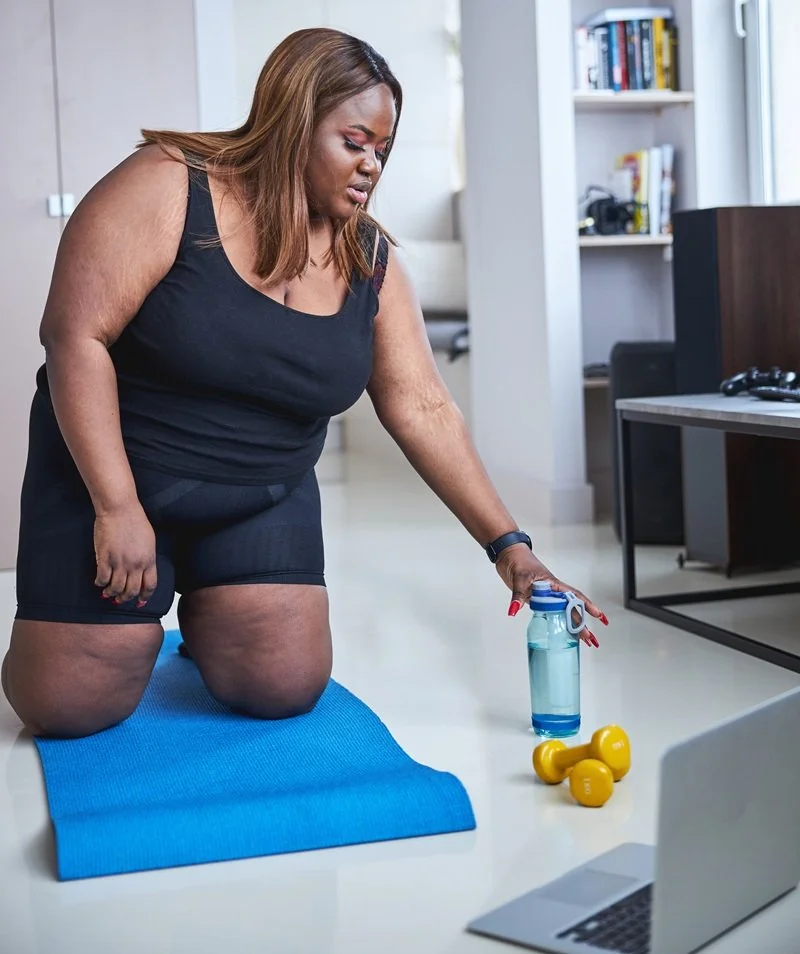
Why Fun Workouts Are Actually More Effective for Consistency
You've probably started over with fitness more times than you can count. You find something, you commit, you go hard for a few weeks, and then life gets busy or your body gets tired or you just... stop wanting to do it anymore.
And somehow, every time that happens, the story you tell yourself is the same: I just don't have the discipline.
But here's what I want you to consider. What if the problem isn't your follow-through? What if it's the fact that the workout you were doing felt like a chore from day one?
There's actually a real reason why enjoyable movement sticks better than hard movement. And once you understand it, the whole conversation about "staying motivated" starts to look completely different.
By the end of this post, you'll know exactly why fun isn't a bonus feature in a fitness routine. It's a biological requirement for consistency. And you'll see why that matters especially for women who've tried and stopped before.
If you're curious about movement that actually feels good to come back to, the Dance Body Starter Kit is a free 7-day experience built around this exact idea. No pressure. No prior dance experience needed. Just movement you can ease into at your own pace.
A Pattern I've Noticed Over Years of Teaching
After years of teaching women of different ages, backgrounds, and fitness levels, I've noticed something interesting.
The women who stay consistent aren't necessarily the most athletic. They're usually the women who find a form of movement they genuinely enjoy. The movement becomes something they look forward to instead of something they have to negotiate with themselves about every day.
That changes everything.
The Science Behind Why Enjoyment Changes Everything
Your Nervous System Has a Vote
When a workout feels hard, uncomfortable, or threatening, your body treats it like a stressor. Your nervous system responds by raising cortisol, activating your fight-or-flight response, and creating a subtle (sometimes not so subtle) sense of dread around the experience.
Over time, that dread adds up. And one day, you just stop showing up. Not because you're lazy. Because your body learned that this thing isn't safe or pleasant, and it's trying to protect you.
Enjoyable movement does the opposite. When you're having fun, your nervous system relaxes. Dopamine is released. Your body begins to associate movement with something good, not something to survive.
That's not soft. That's biology.
Adherence Is an Emotional Decision
Calorie deficits, progressive overload, heart rate zones. These things work. They're the foundation of real, lasting physical change, and they're worth taking seriously.
The problem isn't the tools. It's how most programs deliver them. When the experience feels relentless, joyless, or just hard to fit into real life, even the most effective methods get abandoned before they have a chance to work.
Research on exercise adherence consistently shows that how people feel during and after a workout is one of the strongest predictors of whether they'll come back. That means the same calorie deficit, the same progressive overload, the same heart rate work lands completely differently depending on whether you actually want to show up for it.
Here's what that means practically:
A moderate workout you enjoy 3x a week outperforms an intense workout you dread and skip
The "best" program is the one you actually stick to
Motivation follows action, but only when that action feels worth repeating
The method matters. But so does the experience of doing it.
Why Dance Rhythm Works Differently
Rhythm is something the body already understands. Long before anyone taught you a dance move, your body was responding to music. Tapping your foot. Nodding your head. Swaying without thinking.
When movement is set to rhythm, a few things happen:
Your brain enters a more relaxed, receptive state. This is sometimes called "groove." It lowers cognitive load, which makes learning feel easier and less intimidating.
Time perception shifts. An hour of Dancehall doesn't feel like an hour, because your nervous system is engaged, not bracing for something hard.
Coordination improves faster. Rhythm gives your body a framework. Instead of memorizing isolated movements, you're syncing with a beat, and that sync makes the movement feel more natural over time.
The dance classes in my method are real Dancehall classes. Not cardio set to music. Not a workout in disguise. Women leave saying things like "I actually want to come back" and "I didn't realize I could move like that."
That enjoyment isn't separate from the results. It's what makes everything else, the strength work, the nutrition, the structure, possible to actually stick to.
The "Starting Over" Cycle Has a Root Cause
If you've restarted your fitness journey more than twice, you're not broken. You were probably in programs that never accounted for sustainability.
Most traditional fitness is built on:
High intensity to "get results fast"
Restriction to speed up outcomes
Willpower as the main fuel source
That model works for about 6 to 8 weeks. Then willpower runs out, life interrupts, and the whole thing collapses.
Sustainable movement is built on something different:
Low enough barrier that you'll actually start on a hard day
Enjoyable enough that you want to come back
Consistent enough that your body begins to change over time
Fun isn't in conflict with results. It's the mechanism that makes results possible.
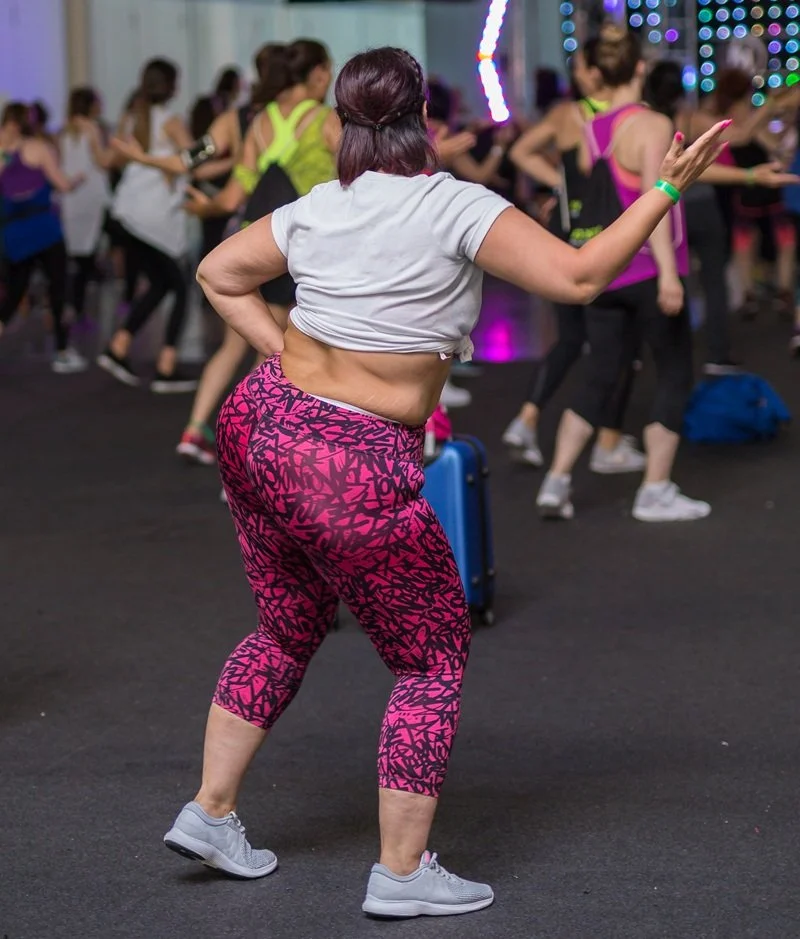
What "Rhythm" Looks Like as a Fitness Foundation
The Thick Like Dumplin Method is built on four pillars, and Rhythm is the first one for a reason. It's the entry point.
When movement feels like a natural extension of how your body already wants to move, consistency stops being something you have to force. It becomes something that happens because the alternative (not moving) feels worse.
Here's what building from rhythm looks like in practice:
Starting with music that already lives in your body
Learning movements that build on natural weight shifts and sways
Progressing at a pace that feels like growth, not pressure
Treating every class as something to enjoy, not endure
From that foundation, you can layer in strength, structure, and flexibility. But none of that sticks without the rhythm piece first.
Why Doing This Alone Makes It Harder
Even when you find movement you enjoy, doing it in isolation has a real cost. There's no one to check in with, no one to celebrate small wins, and no structure to return to when life gets messy.
That's not a motivation problem. That's just the reality of trying to build a new habit without a container for it.
Guidance, community, and structure don't just feel nice. They're what allow you to keep going when the initial excitement fades. And that's usually the exact moment most programs fall apart.
You Don't Have to Like Working Out. You Just Have to Find Movement You Like.
That reframe matters. "Workout" carries a lot of weight for women who've had hard experiences with fitness. But movement is something else. It's something you've always been doing, with or without a program.
The goal isn't to make you love exercise. It's to help you find a form of movement your body recognizes as good, and build from there.
The Dance Body Starter Kit is a free 7-day experience designed around this exact idea. Short, guided sessions. Dancehall movement. A pace that meets you where you are.
It's not a fitness challenge. It's an invitation to see what it feels like to actually enjoy moving again.